A proposal is not a document that proves you know everything. It's a document that answers one question for the person reading it: "Is this the right person for this project?"
Everything else — the methodology, the timeline, the pricing — is evidence for that answer.
Here is how to build a proposal that actually works.
The mistake most proposals make
Most proposals fail before the pricing section because they lead with the seller, not the client.
"We are a results-driven consultancy with over ten years of experience delivering value across multiple sectors" is the opening sentence of a document that will be skimmed, not read. The client does not care about your ten years of experience in the first paragraph. They care about their problem.
Lead with the client's situation. State what you understand about their challenge, their constraints, and what success looks like for them. If your opening paragraph could have been written without any knowledge of the specific client or project, rewrite it.
The structure that works
A proposal does not need to be long. It needs to cover the right things in the right order.
1. The situation summary (half a page, maximum)
State what you understand to be the client's current situation and the problem they need to solve. This is not the place to show research depth — it's the place to demonstrate that you listened. One short, accurate paragraph per key point. If the client reads this section and thinks "yes, that's exactly it," you've already differentiated yourself from 80% of the proposals they receive.
2. The approach
How you will solve the problem. Not every methodology and sub-process — the key phases, the key decisions, and the key outputs. A client should be able to read this section and understand what working with you will feel like, not just what you will deliver.
3. Deliverables and scope
What they get. State it specifically. Vague deliverable lists create scope disputes; specific lists set clear expectations. If there are things explicitly out of scope, say so here — it protects both parties.
4. Timeline
A simple phase-by-phase timeline. Start date, milestones, end date. If the timeline depends on client inputs or approvals, name those dependencies explicitly.
5. Investment
Use the word "investment," not "cost" or "fee" — not because it's a sales trick, but because it frames the purchase correctly. Include the payment schedule and your preferred payment method. In the EU context, include whether the price is excl. or incl. TVA/VAT.
6. Next steps
Exactly what needs to happen for the project to start. One clear paragraph: "To move forward, please sign and return this document and transfer the deposit of €X by [date]. I will then schedule our project kickoff call."
7. Terms (brief)
Key engagement terms: revision rounds, ownership of deliverables, payment terms, cancellation policy. Not a legal document — a brief statement of how you work.
What not to include
- A long company bio in the first section
- A generic statement of values ("We believe in quality and collaboration")
- Client logos unless they're directly relevant to the project at hand
- A process diagram that looks impressive but doesn't explain your actual approach for this project
- Pricing with no context — the price should follow immediately after the deliverables
EU-specific notes
If you're a freelancer or consultant operating in France or the EU, a few specifics apply:
TVA/VAT: State clearly whether prices are HT (hors taxe / excl. VAT) or TTC (toutes taxes comprises / incl. VAT). For B2B proposals across EU borders, reference the reverse charge mechanism if applicable.
Currency: Use EUR consistently. Do not mix EUR and USD in a European proposal.
Contract law: A signed proposal constitutes a binding agreement in most EU jurisdictions. Make sure your payment and cancellation terms are clear, because they have legal weight once signed.
The practical shortcut
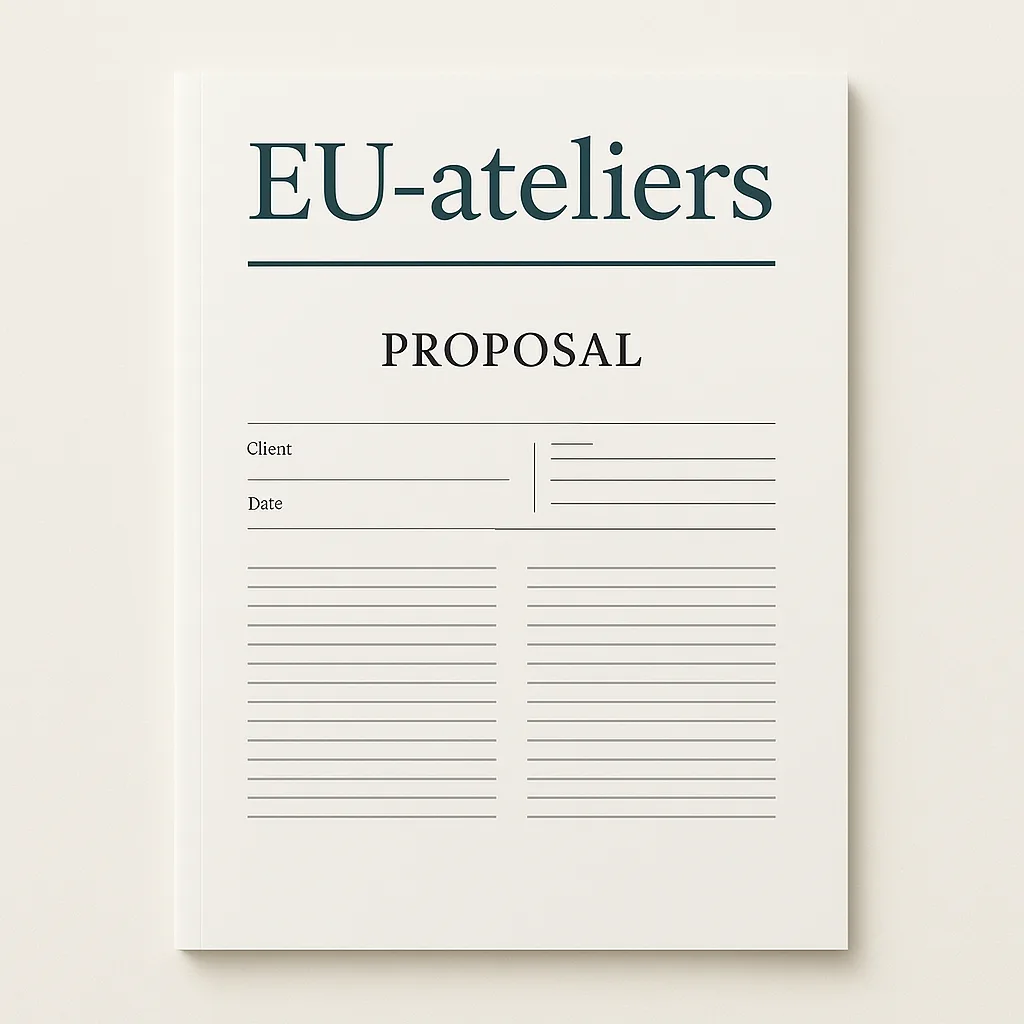
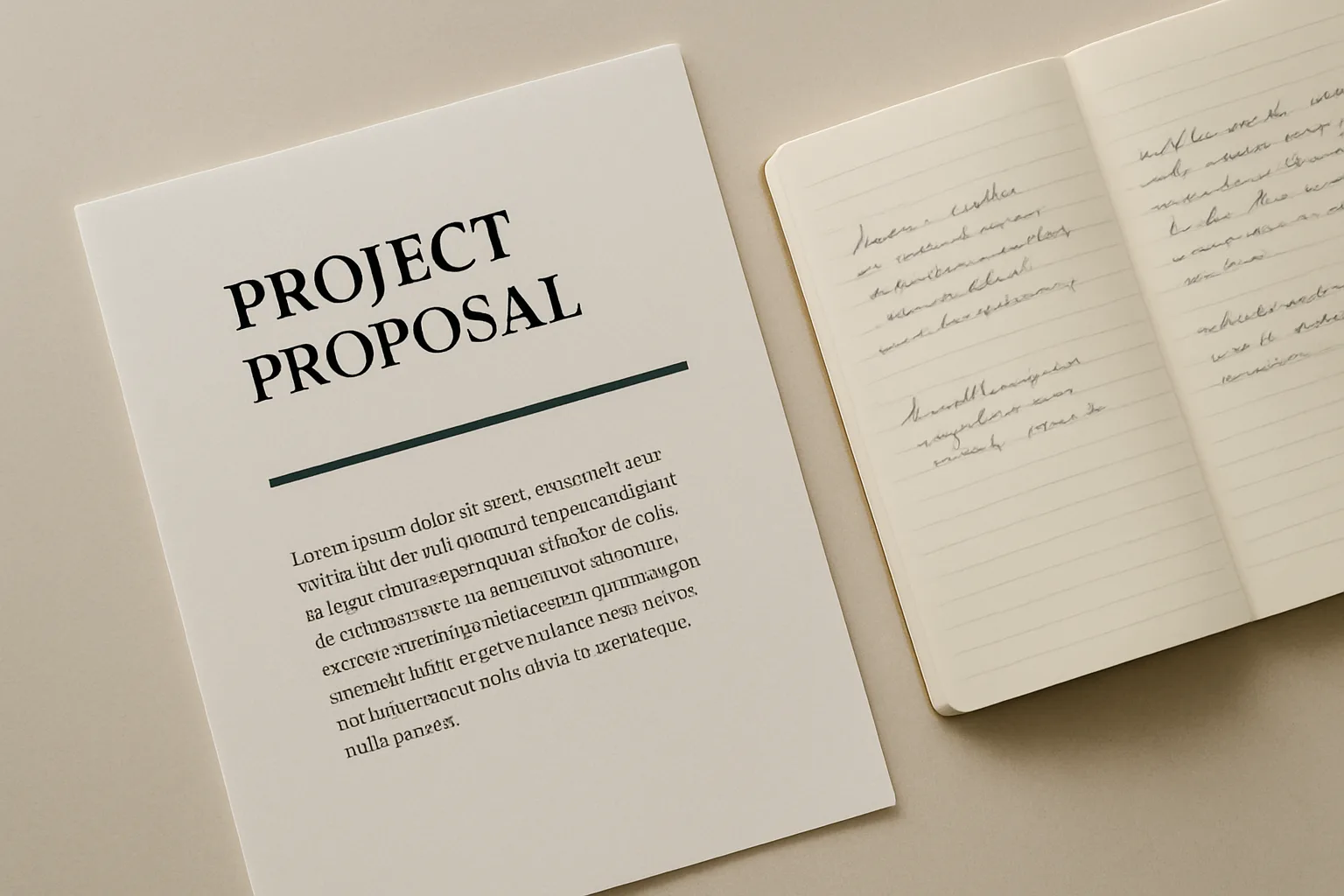
If you have a project to propose this week, you do not need to build a proposal template from scratch. Our Modern Proposal Pack gives you a professionally formatted twelve-page structure — cover page, situation summary, approach, deliverables, timeline, investment, and terms — ready to edit in Google Docs or Microsoft Word.
The structure is already there. Replace the placeholder text with your project details. That's the fastest path to a proposal that looks professional and reads clearly.